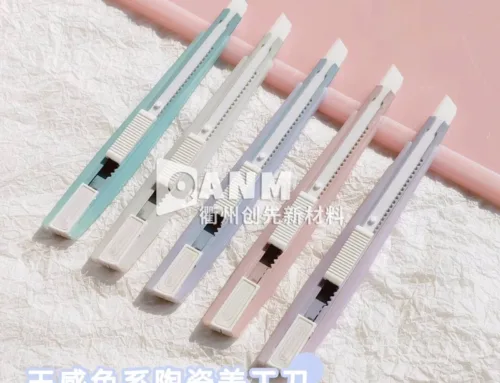
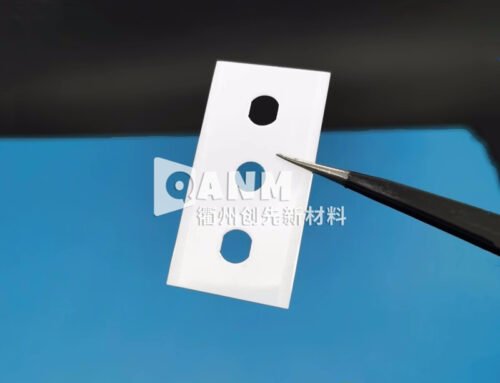
Ceramic Blade VS Steel Blade
As modern manufacturing evolves at an unprecedented pace, advancements in cutting-tool materials have become crucial to improving machining efficiency, precision, and overall production costs. Traditional metal blades—primarily high-speed steel (HSS) and cemented carbide—have long been the backbone of the machining industry. However, with major breakthroughs in advanced ceramic materials, ceramic blades and industrial ceramic cutting blades have emerged as high-performance alternatives, offering unique advantages in demanding machining environments.
This article provides a comprehensive comparison between ceramic blades and metal blades, examining material characteristics, machining performance, economic value, and industrial applications—while emphasizing the superior capabilities of modern industrial ceramic blades.
1. Material Properties: The Fundamental Edge of Ceramic Blades
1.1 Hardness and Wear Resistance
Ceramic blades / industrial ceramic blades
-
Manufactured from alumina, silicon nitride, zirconia, or composite ceramic systems
-
Hardness typically exceeds HRC 90
-
Extremely high density and wear resistance, even in prolonged high-speed machining
Metal blades
-
HSS hardness: HRC 63–70
-
Carbide: ~HRA 89
-
More susceptible to rapid wear under temperature and friction stress
Conclusion: Ceramic blades offer 2–3× higher hardness and significantly longer service life compared to traditional metal blades.
1.2 High-Temperature Resistance
Ceramic cutting blades
-
Withstand temperatures above 1000°C
-
Maintain hardness and structural integrity with no thermal softening
-
Ideal for high-speed dry cutting
Metal blades
-
HSS softens at 600°C
-
Carbide degrades around 800°C
-
Prone to thermal deformation
Conclusion: Industrial ceramic blades provide reliable performance in extreme-heat machining where metal blades fail.
1.3 Chemical Stability
Because ceramic materials are chemically inert, ceramic blades exhibit:
-
Excellent oxidation resistance
-
No chemical reactions with most metals
-
No sticking, built-up edge, or diffusion wear
Metal blades commonly react with difficult-to-cut materials at high temperatures, reducing tool stability and machining quality.
2. Machining Performance: Ceramic Blades Enable High-Efficiency Cutting
2.1 Cutting Speed and Productivity
Ceramic blades / industrial ceramic cutting blades can operate at 3–10 times the cutting speed of metal blades.
They excel in machining:
-
Cast iron
-
Stainless steels
-
Heat-resistant alloys
-
Hardened steels
Higher cutting speeds mean reduced cycle time and significantly higher throughput.
High-speed cutting = higher productivity + lower per-part cost
2.2 Tool Life and Stability
Ceramic blades offer:
-
Slow and predictable wear
-
Excellent edge retention
-
Reduced vibration and higher process stability
This long tool life translates into fewer tool changes, reduced machine stoppage, and improved continuous-processing capability—critical for industries such as automotive, aerospace, energy, and precision components.
2.3 Superior Surface Finishes
Thanks to a stable cutting edge and excellent heat control, ceramic blades deliver:
-
Better surface finish
-
Lower roughness values
-
Minimal thermal damage to the workpiece
Metal blades dull more quickly and tend to deform under heat, compromising surface quality.
3. Economic Benefits: Ceramic Blades Lower Long-Term Machining Costs
3.1 Lower Cost per Machined Part
Although ceramic blades may cost more upfront, their total cost of ownership is lower due to:
-
Longer tool life
-
Higher cutting parameters
-
Fewer machine stoppages
-
Lower scrap rates
In mass-production environments, industrial ceramic blades typically achieve a noticeably lower cost per part than metal blades.
3.2 Dry Machining Capabilities Reduce Coolant Costs
Ceramic blades are built for dry cutting, which helps manufacturers:
-
Reduce coolant usage
-
Lower maintenance and disposal expenses
-
Improve environmental compliance
Metal blades generally require coolant to prevent softening or chemical reactions.
3.3 Reduced Maintenance and Simple Storage
Ceramic cutting blades resist corrosion and oxidation, making them easier to store and less sensitive to environmental conditions.
4. Application Versatility: Ceramic Blades Excel in Difficult Machining Environments
4.1 Ideal for Hard-to-Machine Materials
Industrial ceramic blades are the go-to solution for materials that severely wear down metal blades:
-
High-silicon cast iron
-
Nickel-based superalloys
-
High-manganese steels
-
Powder-metallurgy metals
-
Thermal-sprayed coatings
-
Hardened steels (HRC 55–65)
Metal blades struggle under the same conditions due to rapid wear or thermal instability.
4.2 High-Speed, High-Volume Manufacturing
Ceramic blades are widely used in:
-
Automotive engine block and brake system machining
-
Aerospace turbine and structural components
-
High-precision molds and dies
-
Military-grade heat-resistant materials
4.3 Perfect for Dry High-Speed Machining
Their ability to operate without coolant aligns with the industry’s shift toward green, environmentally friendly manufacturing.
5. Summary of Key Advantages of Ceramic Blades
| Performance Metric | Ceramic Blades / Industrial Ceramic Blades | Metal Blades (HSS / Carbide) |
|---|---|---|
| Hardness | HRC 90+ | HRC 63–70 / HRA 89 |
| Heat Resistance | >1000°C | 600–800°C |
| Wear Resistance | Very high | Moderate |
| Cutting Speed | 3–10× faster | Limited |
| Dry Cutting Suitability | Excellent | Limited |
| Hard-Material Machining | Highly effective | Restricted |
| Long-Term Cost | Lower | Medium–High |
6. Challenges and Best-Practice Guidelines
Ceramic blades have lower fracture toughness than metal blades and therefore require:
-
Machines with high rigidity
-
Stable cutting conditions
-
Avoidance of interrupted cuts
-
Proper tool geometry and cutting parameters
-
Consistent tool management practices
With proper application, ceramic cutting blades dramatically outperform metal blades.
7. Future Outlook: Strong Growth for Industrial Ceramic Blades
With emerging technologies such as:
-
Nano-reinforced ceramic composites
-
Functionally graded ceramic structures
-
Ceramic-metal hybrid blades
the toughness and reliability of ceramic cutting blades will continue to advance.
As smart manufacturing and Industry 4.0 evolve, the integration of sensor-enabled ceramic blades and intelligent process monitoring will further improve machining efficiency and consistency.
Conclusion
Industrial ceramic blades—thanks to their exceptional hardness, thermal stability, chemical inertness, and unmatched wear resistance—are reshaping the landscape of modern machining. Despite inherent brittleness, continual advancements in ceramic engineering are rapidly expanding their range of applications.
For manufacturers pursuing higher efficiency, lower cost per part, and superior surface quality, ceramic blades represent not just a technical upgrade but a strategic advantage. As manufacturing technology continues to evolve, ceramic cutting blades will play an increasingly critical role in the global shift toward high-performance, high-precision machining.